
Professional electronic music mastering, mixing, and production services. Let veteran producer and engineer Jesse Skeens help you achieve your musical goals
Reach new fans and stay connected to your existing audience by presenting your music in the best possible light.
Premium analogue mastering for the utmost in sound quality.
Hear the difference in bespoke audio mastering tailored to the way you want your music to sound. Warm, full, clean, punchy tracks with optimized stereo width ready for the clubs, radio, or any environment.
Some Of My Work
Listen to more samples of mixing and mastering.
I am committed in making sure you are happy with your masters. You’ve put a lot of work into your music, now it’s time to take it to the next level.
Ready To Take Off?
Why Choose Medway Studios?
Experience:
- 30 Years production background engineering, mixing, and mastering releases on some of the largest labels in dance music such as Hooj Choons, Ministry of Sound, Universal Records, and more.
- Support from not only DJs such as Sasha, John Digweed, Paul Oakenfold, Danny Tenaglia, Erik Morillo but airplay and TV spots on the BBC.
- Artists such as Full Intention, Chris Willis, Ralphie Rosario, Wide boys, Jason Nevins, Seamus Haji, Crystal Waters, Hernan Cattaneo, Pig and Dan, Spooky, Infusion, Jody W, Guy J, Soul Minority, ATFC, Cevin Fischer, Dj Pierre, Pole Folder, Bonzai, Perfecto, Lost Language, Saved Records, and more have had their masters and or mixdowns come through this studio.
Service:
- Simply upload your music and receive a free consultation to prepare your mixdown for mastering.
- Tips in how to improve your future productions.
- Revisions until you are satisfied with the balance and loudness of your master.
- Music mastering studio skilled in all styles of electronic music: Deep House, House, Tech House, EDM, Drum and Bass, Trance and more...
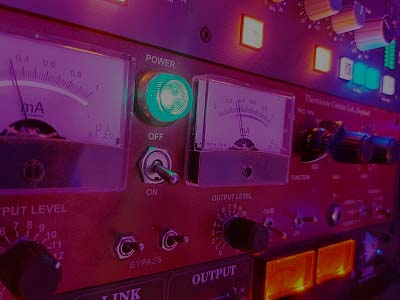
- Analogue processing from API, Manley, Neve, Pultec, SSL and more for added depth, harmonics, and vibe

MASTERING
Take your stereo premaster to radio and club ready format with a hybrid of the best digital and analogue processing. For tracks that need extra control over stereo mastering. Submit between 4-8 stems. Problem areas can be more finely tuned.
MIXING
Mixing allows detailed treatment of every element in your track. Each stem is balanced and treated with EQ, compression and effects according to your overall vision.
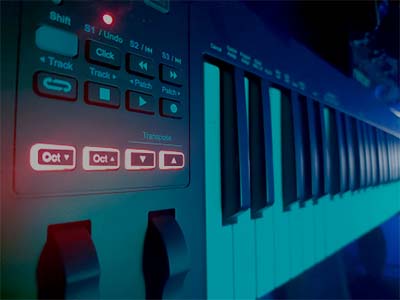
PRODUCTION
Writing assistance can help add authentic sounding elements to complete your song depending on the specific needs for your project. Includes mixing and mastering.
My Work Has Appeared On:

Here’s What Clients Say:
"You're one of my favourite house music producers" James Lavelle - UNKLE
"Oh Yes Medway, Just what I was looking for.. " Cevin Fisher
"Fabulous..." Solarstone
"With Jesse's background and knowledge, you can rely on Medway Studios to do a high quality job and whether it be mixing or mastering, the personalized service, overall quality and value for money is unrivaled" James Harcourt - Twisted Frequency
"Jesse's been great. His studio makes changes and gives you exactly what you ask for. I use him for all of our releases. The clubbers thank him" Omnis Recordings
"Jesse came highly recommended to me from a good friend, I was impressed with the quality of the masters and the turnaround speed he got them back to me. I don't think I will be going anywhere else anytime soon." BP Zulauf - Helvetica Recordingz
Learn More About Electronic Music Mastering
- Why is electronic music mastering necessary?
- Common issues with electronic music mixes
- What does a mastering engineer do?
- How genre affects the sound
- The Mastering Process: Stereo vs. Stem
- Loudness, Dynamics, and Formats
- Mastering the Low End
- Preparation and Exports
- DIY vs. Professional Mastering
- Mastering Expectations
Why is electronic music mastering necessary?
Have you ever played a song that took hours to create only to realize it doesn't sound good across different playback systems? It sounded good in your headphones at home, but then things didn't go so well once you tried listening in your car. Even on your phone it sounds bad. Important parts are either buried or too loud.
Maybe you are a DJ and tried playing it along to other tracks in a set and it fell flat and sounded out of place? Or you sent some music to a label and got no response. Was the song the issue or did it just not sound professional enough for them to spend time listening to?
All of these problems can be a result of a poor mix and master. Instead, imagine after a mix and master your music sounds the way it did in your head.
Electronic music requires a high level of balancing and processing to blend and enhance all the elements that make up the song. That way they work together instead of fighting each other.
Drums groove together with the right amount of punch so they aren't buried by synths. Basses add weight, warmth and movement in the low end while not interfering with the kick. Synths add melodic interest and depth without overpowering the drums and vocals.
Vocals that sound smooth and clear. Hooks with a human touch the listener can't get out of their head. These can easily sound harsh or uneven if not treated professionally.
Effects and ambient sound help each section of the song transition to the next and provide complex textures to tie the track all together and give it more interest.
With so many elements of a song competing, if any one of these is out of balance or not serving its role correctly the track won't work the way it was intended.
What are some common issues with electronic music mixes?
For many electronic tracks, especially club or dance orientated songs, the kick drum will be the loudest element. This is often the biggest failure point in a mix I see. A good sample will go a long way to ensure it works in the track without excessive processing. If you rush this part then the entire mix will be much more difficult.
I encounter many tracks where a different kick drum sample works better instead of trying to over process it. Unnecessary layering can also make the problem worse.
Once the right kick sample is chosen subtle compression and EQ is usually enough to help it work with the rest of the drums and bass.
Pairing a bass sound that complements the kick is also very important. This includes choosing the key of the song as this will determine what sub frequencies are present which can radically change the feel of the low end. I've seen many tracks come in with kicks or basses tuned too high or low which limits the feel of the low end. This isn't something that mixing itself can overcome so choose the key carefully.
Getting both the kick sample and bass sound right depends on the accuracy of your monitoring which many home studios don't have access to. A major advantage to my setup is I can clearly hear these problems and help your low end sound solid and warm so it hits cleanly whether in a club or on earbuds.
What does a mastering engineer do for electronic music?
Electronic music can vary quite a lot from ambient to techno and everything in between. I requires a mastering engineer with many hours of listening to those genres to know how to balance a track so it stands up to similar tracks in its respective genre.
As a mastering engineer I use my skills developed with experience and accurate monitoring combined with a proven set of tools to achieve all of the above to a high level.
Lots of mastering engineers will take on work for an electronic track without the knowledge of how it should sound. They'll process it in the wrong direction which doesn't fit the vibe for that kind of music.
You end up with the low end wrong, too thin or too full, mid range or highs that end up harsh and the track doesn't feel right.
With my 30 years experience listening and working on thousands of songs in all types of electronic music I am able to apply the right type of processing depending on your project.
Genres
How does genre affect mastering? Most music styles have a certain type of sound of their masters. This is partly down to the types of sounds that make up the music. So for instance a kick on a techno track might be different than with house. Standards emerge over time that will affect the sound too such as overall level and EQ balances.
Since most artists want their music to stand up to other tracks in the genre a certain amount of matching is done which results in a sameness across the genre. This isn't necessary a bad thing but its something to watch out for early on in the process to make sure you can arrive that the intended destination.
It's important to not leave these decisions until the final mastering stage thinking that you can make your song fit on mastering alone. Sound selection, arrangement and mixing will be major factors in how your song will compete and blend into the genre standards. Covering every genre here would take too much space but a good rule of thumb is to just listen to lots of music in the style you're creating and make notes of how the low end is constructed all the the way up to the top.
What happens during the mastering process?
The process starts with understanding what stage the song is at.
If the mix is well balanced without too many glaring issues then a stereo master is the next step. But if the kick or bass aren't sitting tight together, the synths are not clear enough, or other larger problems exist then a stem master works better.
When all done correctly the track doesn't just sound like a collection of different sounds but a piece of music that lives and breathes and has a vibe that allows the listener to feel the music not just hear it.
The tools used for mastering electronic music can vary depending on the taste of the engineer. I prefer a hybrid approach of analogue and digital. Plugins have gotten better over time but to me there is still a very noticeable difference that I get from analogue. It doesn't always suit every genre but certain ones like house, disco, and anything with a nod to the 80s or 90s benefit from it.
Analogue helps soften transients in a unique way for a smooth polish, rich dynamics, harmonics and "glue". But if a track needs more precision I'll lean more on digital. Having both gives me the option to master music the best way for its needs.
Mastering shouldn't change the mix too much. Many engineers over process to make up for mix issues. That's why I offer to give feedback to help an artist get their song sounding its best before sending it to be mastered. Bad mastering can ruin a track or take it in a direction it was never meant to. Great mastering will fix any minor issues with the least amount of harm and enhance the musicality and feeling of the song.
Loudness, Dynamics, and Format Considerations
How Loud?
There are many debates about how loud tracks should be. The loudness war has been declared over because streaming services expect a lower LUFS target.
This shouldn't be the only decision on what level the song is mastered at. I find that since the limiting affects the sound the amount of gain reduction should be thought of stylistically and not just as a number to target.
I do offer streaming versions for artists who prefer to keep with the limits that those places ask for. Just be aware that your song might sound quieter compared to others even with the automatic gain places like Spotify and YouTube apply.
How does mastering affect dynamics
Mastering will almost always reduce some dynamics but that's not a bad thing since it can help a track sound tighter. Too little dynamic control can make a song sound all over the place with certain sounds too loud or other elements buried. This is partly down to how it was mixed since most of the work is done there, however. It's important to understand that controlling dynamics also helps give the music shape which contributes its feel.
Formats: Streaming, Downloads, and Vinyl
Today most music is either downloaded or streamed. Formats include a version for digital downloads. Streaming services such as Spotify and YouTube prefer music to be levelled lower than a typical downloadable song so they can match up the volume as needed to create a consistent level across their services.
Although they have processes in place to make music sound all about the same level I find that if you keep to their targets your track can sound quieter compared to others who have submitted the louder downloadable version. I do offer streaming versions for those who want the extra dynamics on those systems and aren't concerned with just loudness.
If you want your music to end up on vinyl there are a few things that can help get it to sounds its best there too such as less width, more dynamics and a slightly reduced bandwidth. If these things aren't taken care of it can either cause problems with the cutting lathe or more work for the engineer on that side so its a good idea to make sure the track is already in the right direction for a vinyl cut.
How does mastering affect bass and low end?
For electronic music the low end is vital to get right and something I spend most of my time on when working on a track. It requires a properly treated room, which I work in, to be able to judge the level and quality of the low end to get it tight and moving the track forward.
Most tracks come in with either too much or too little low end. Many artists don't have the ability to judge this area due to lack of accurate monitoring. This leads to guessing and relying on meters. There's nothing like feeling the weight of a sub on a good system to really feel how its working compared to what a meter shows.
Preparation
So how should an electronic music track be prepared for mastering? It's really important to double check the mix and make sure any big issues are taken care of there first. Leaving things to mastering is almost always going to result in a worse outcome.
Kicking the can down the road just leads to more frustration at the master stage. If it all seems good to go then export the track without the limiter at 24bit and whatever sample rate the project was in and then it can be worked on as a whole piece. The overall level should be just quiet enough to not incur any clipping.
Another option is to export the main parts of the track such as the kick, bass, synths, etc... as groups and work as a stem master. This helps reduce the complexity of the full mix while giving enough control over the main elements.
DIY vs Pro Mastering
If you're reading this you might be considering doing your own mastering. So the question is what difference does a dedicated mastering engineer make over a DIY approach?
There is a perception that mastering engineers have special tricks or equipment that allow them to produce their results. But its simpler than that. It mostly just comes down to execution and taste developed through practice and excellent monitoring, two things that aren't easily replicated at home.
I listen to hours of music just to hear the subtle differences in tone and character so I can apply that to songs I master. This isn't just a process of making it louder but better. If you're spending most of your time creating music there aren't many hours left to hone in these types of skills. Setting up a properly treated room and learning that also takes years of time and expense.
So to answer the question, yes you can master your own music. But, you'd really be missing out on what mastering is really about, precision with artistry that can only be obtained through long hours of dedication to the craft itself.
You have to make the decisions are you prepared to sink the hundreds to thousands of hours to learn? Or work with someone who enjoys the craft of mixing and has put the time in already?
Mastering Expectations
What can you expect from a finished mastered song? What you don't want to try is to fix major issues with the kick and bass or harsh elements in mastering. These are usually too difficult to isolate in a stereo mix and you'll have to over process in an effort to control them which will have a negative effect on the final outcome.
Assuming your mix was done well the master shouldn't make a huge difference in practical terms, the fewer changes the better. But it should sound finished and have a vibe to it where everything just flows and sounds balanced on a level the mix maybe didn't quite reach. It's more about tying a few loose ends and adding more life to the track than radical fixes or changes. This is where analogue can really shine. Even with subtle colouration the song gets lifted and just feels better.
It's a small difference, maybe 5-10%, but this is actually huge in how the song can be perceived. So when I say a little difference I mean individually all the adjustments might be a db here and there but it adds up to something much bigger. This is where something sounds 'mastered' and not just different or processed. It's a subtle but very important difference. It's why a home master doesn't sound the same as a pro one. A pro might do less moves but make better decisions and that's where the art and experience come into factor.